


Bitterness and pungency
Bitterness is a positive trait. It comes from oleuropein, a natural polyphenol found in fresh olives.
High-polyphenol EVOO often tastes bold. This bitterness adds depth and elevates both simple meals and refined dishes. If the oil tastes soft, mild, or neutral, something crucial is missing.
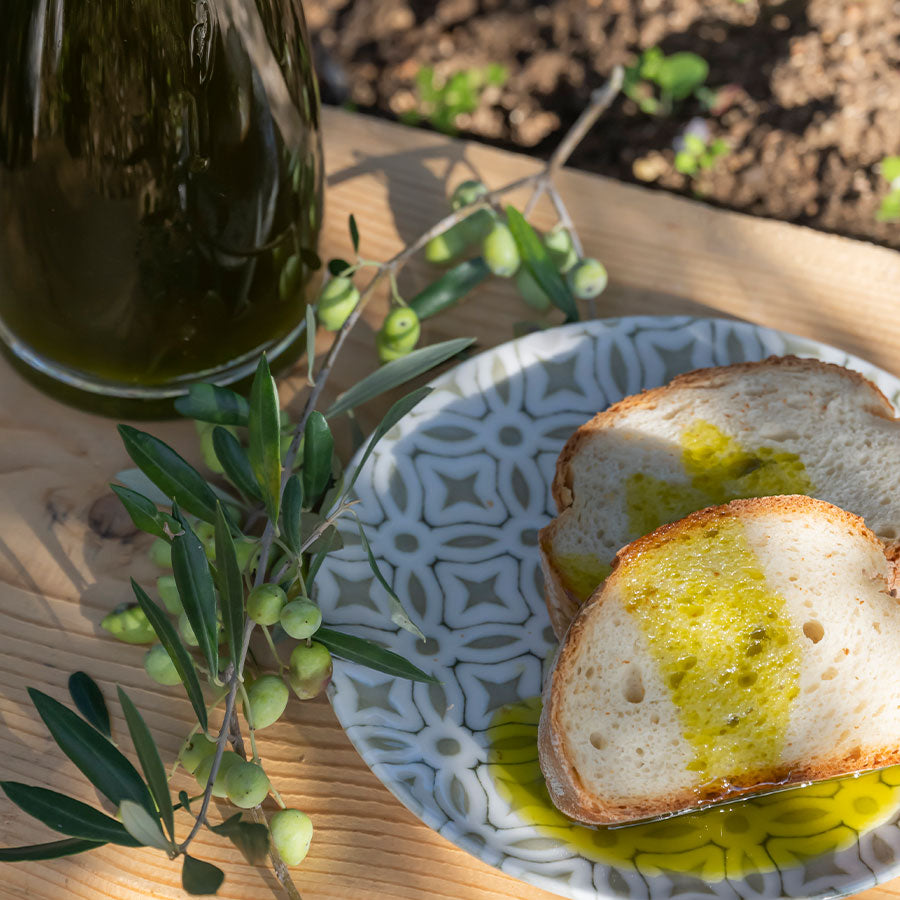
A peppery finish in the throat
That slight burn or tickle you feel in the back of your throat? That sensation is intentional and desirable. It comes from oleocanthal, a powerful polyphenol with anti-inflammatory properties.
High-polyphenol EVOO should induce a gentle cough or throat-clearing instinct. That indicates the oil is alive and potent rather than flat and rancid.
Complexity and balance
Great EVOO isn’t one-note. It’s layered.
Look for bitterness, pungency, and fruitiness. The oil should feel dynamic without being harsh. This balance is a hallmark of oils rich in polyphenols and handled with care.
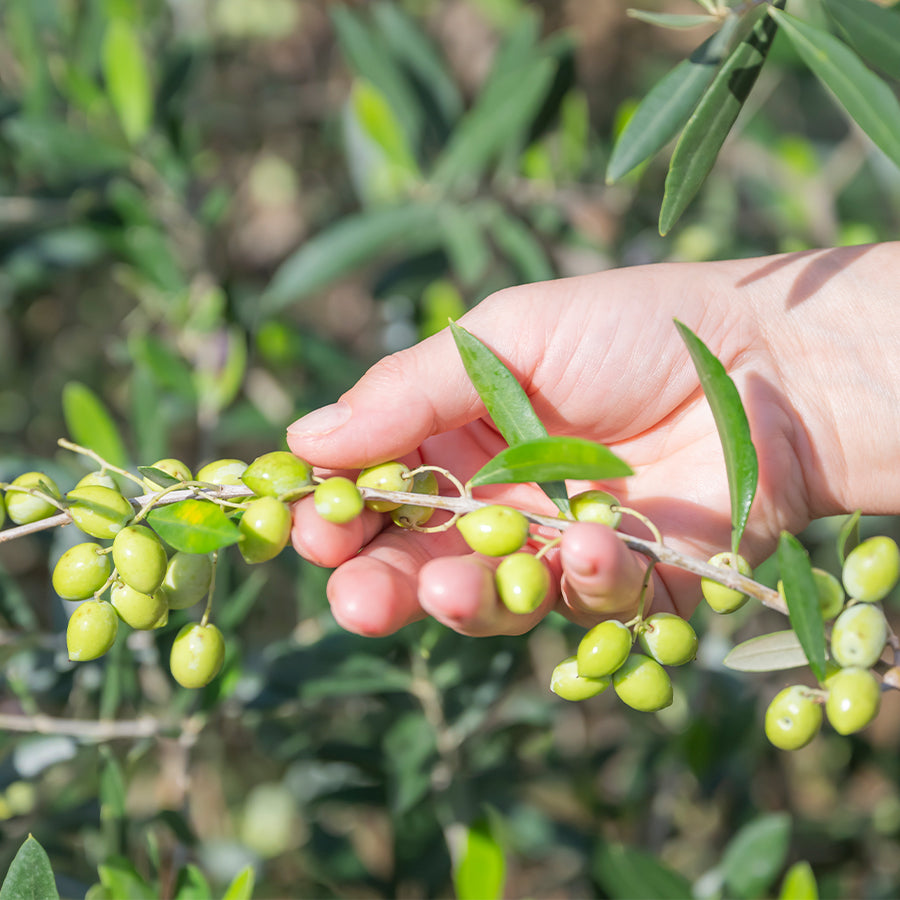
Fresh aromas and green notes
High-polyphenol EVOO carries distinct aromas.
You may notice green grass, green banana, herbs, nuts, floral tones, or a buttery finish. First-harvest oils often show brighter, spicier, and more bitter characteristics. Those green, vibrant notes fade as oil ages. Look for fresh aromas and notes, and you won’t go wrong.
How to taste EVOO properly
- Pour a small amount of EVOO, about 30 ml, into a dark glass.
- Warm it gently in your hand.
- Inhale deeply to capture the aromas.
- Sip and lightly slurp, spreading the oil across your palate.
- Notice bitterness, pungency, and complexity.
- Pay attention to how the oil lingers.
Polyphenols shape both flavor and shelf life. They act as natural preservatives, helping maintain stability over time, and they contribute to the vast majority of the health benefits of olive oil.
At Green Autumn Revival, we select and lab-verify high-polyphenol EVOO to ensure these sensory markers are present, so what you taste reflects true freshness and integrity.
When EVOO tastes alive, it usually is.